Why Cloud Security is More Critical Than Ever
In today's rapidly evolving digital landscape, the cloud has become an integral part of business operations. From storing critical data to running essential applications, organizations of all sizes are leveraging the power and scalability of cloud computing. However, this widespread adoption has also brought forth a critical concern: cloud security. What was once a secondary consideration is now a paramount necessity. But why is cloud security more critical than ever, and what can businesses do to protect themselves?
The Expanding Cloud Landscape and Increasing Risks
The cloud is no longer a niche technology; it's the backbone of modern IT. As businesses migrate more of their operations to the cloud, the attack surface widens dramatically. This expanded attack surface, coupled with increasingly sophisticated cyber threats, makes robust cloud security essential for protecting sensitive data and maintaining business continuity.
The Proliferation of Cyber Threats
Cybercriminals are constantly evolving their tactics, and the cloud presents them with new opportunities. Common cloud security threats include:
Data Breaches: Unauthorized access to sensitive data stored in the cloud. Example: A misconfigured cloud storage bucket exposing millions of customer records.
Malware and Ransomware: Malicious software designed to encrypt data and demand a ransom. Example: A ransomware attack targeting a cloud-based application, crippling business operations.
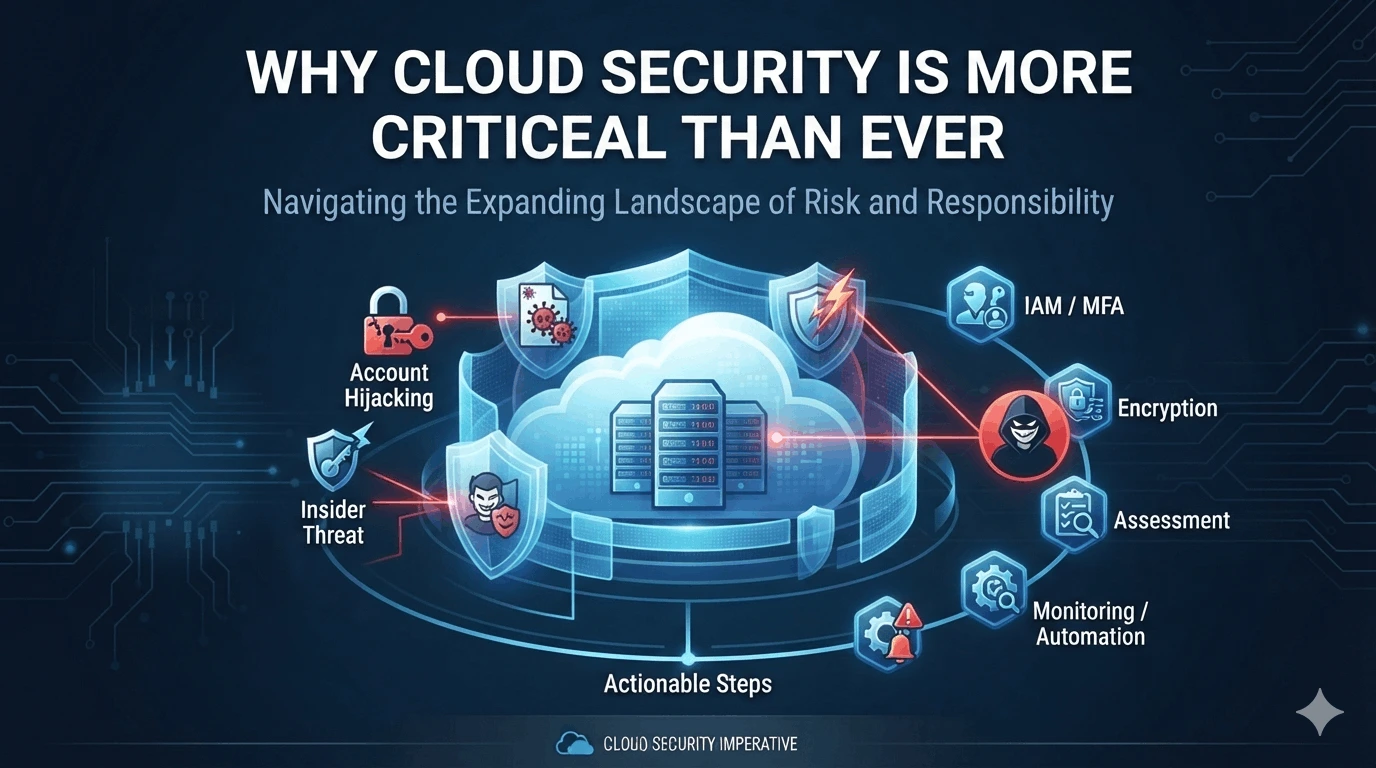
Account Hijacking: Gaining unauthorized access to cloud accounts through stolen or compromised credentials. Example: Hackers using stolen credentials to access and manipulate cloud resources.
Distributed Denial-of-Service (DDoS) Attacks: Overwhelming cloud resources with traffic to disrupt service availability. Example: A DDoS attack targeting an e-commerce website hosted in the cloud, rendering it inaccessible to customers.
Insider Threats: Malicious or negligent actions by employees or contractors with access to cloud resources. Example: A disgruntled employee deleting critical data from a cloud database.
The Complexities of Cloud Environments
Cloud environments are inherently complex, often involving multiple services, providers, and configurations. This complexity can make it challenging to maintain a consistent security posture and identify vulnerabilities. Key challenges include:
Lack of Visibility: Difficulty in monitoring and managing cloud resources, making it hard to detect security threats.
Misconfigurations: Incorrectly configured cloud services, leaving them vulnerable to attack. This is arguably the most common cause of cloud security incidents.
Shared Responsibility Model: Understanding the division of security responsibilities between the cloud provider and the customer (you). The provider secures the infrastructure, but you are responsible for securing what you put in the cloud.
Compliance Requirements: Adhering to industry regulations and standards (e.g., GDPR, HIPAA) for data security and privacy.
Skills Gap: A shortage of skilled professionals with expertise in cloud security.
Why Cloud Security is More Than Just an Afterthought
In the past, security was often treated as an afterthought, something to be addressed after the core infrastructure was in place. However, this approach is no longer viable in the cloud. Cloud security must be a proactive and integrated part of the entire cloud lifecycle, from planning and deployment to ongoing management and monitoring.
The Cost of Inaction
The consequences of neglecting cloud security can be devastating. A data breach can result in:
Financial Losses: Fines, legal fees, and remediation costs. A single data breach can cost millions of dollars.
Reputational Damage: Loss of customer trust and brand value.
Operational Disruption: Downtime and business interruption.
Legal Liabilities: Lawsuits and regulatory penalties.
Benefits of a Strong Cloud Security Posture
Investing in robust cloud security, on the other hand, offers numerous benefits:
Reduced Risk: Lower likelihood of data breaches and security incidents.
Improved Compliance: Easier adherence to industry regulations and standards.
Enhanced Trust: Increased customer confidence in your ability to protect their data.
Business Agility: Greater flexibility and scalability to adapt to changing business needs.
Competitive Advantage: A strong security posture can be a key differentiator in the marketplace.
Actionable Steps for Enhancing Cloud Security
Securing your cloud environment requires a comprehensive and multi-layered approach. Here are some actionable steps you can take:
Implement Strong Identity and Access Management (IAM): Use multi-factor authentication (MFA), role-based access control (RBAC), and least privilege principles to restrict access to cloud resources.
Encrypt Data at Rest and in Transit: Protect sensitive data by encrypting it both when it's stored and when it's being transmitted. Use strong encryption algorithms and manage encryption keys securely.
Configure Cloud Services Securely: Regularly review and update cloud service configurations to ensure they align with security best practices. Use automated configuration management tools to prevent misconfigurations.
Monitor Cloud Activity and Logs: Implement comprehensive monitoring and logging to detect suspicious activity and potential security threats. Use security information and event management (SIEM) systems to analyze logs and identify patterns.
Conduct Regular Security Assessments: Perform vulnerability scans, penetration tests, and security audits to identify and address weaknesses in your cloud environment.
Automate Security Tasks: Automate security tasks such as patching, configuration management, and threat detection to improve efficiency and reduce human error.
Educate Your Team: Provide regular security training to employees to raise awareness of cloud security threats and best practices. Phishing simulations can be particularly effective.
Implement a Cloud Incident Response Plan: Develop a detailed plan for responding to security incidents in the cloud. Regularly test and update the plan to ensure its effectiveness.
Conclusion: Embracing Cloud Security as a Business Imperative
In conclusion, cloud security is no longer a luxury; it's a fundamental requirement for any organization that relies on cloud computing. The increasing sophistication of cyber threats, the complexity of cloud environments, and the potential consequences of a data breach all underscore the critical importance of prioritizing cloud security. By taking a proactive, integrated, and multi-layered approach to cloud security, businesses can protect their data, maintain their reputation, and unlock the full potential of the cloud. Embracing cloud security as a business imperative is not just about mitigating risk; it's about enabling innovation, fostering trust, and building a more secure and resilient future.